
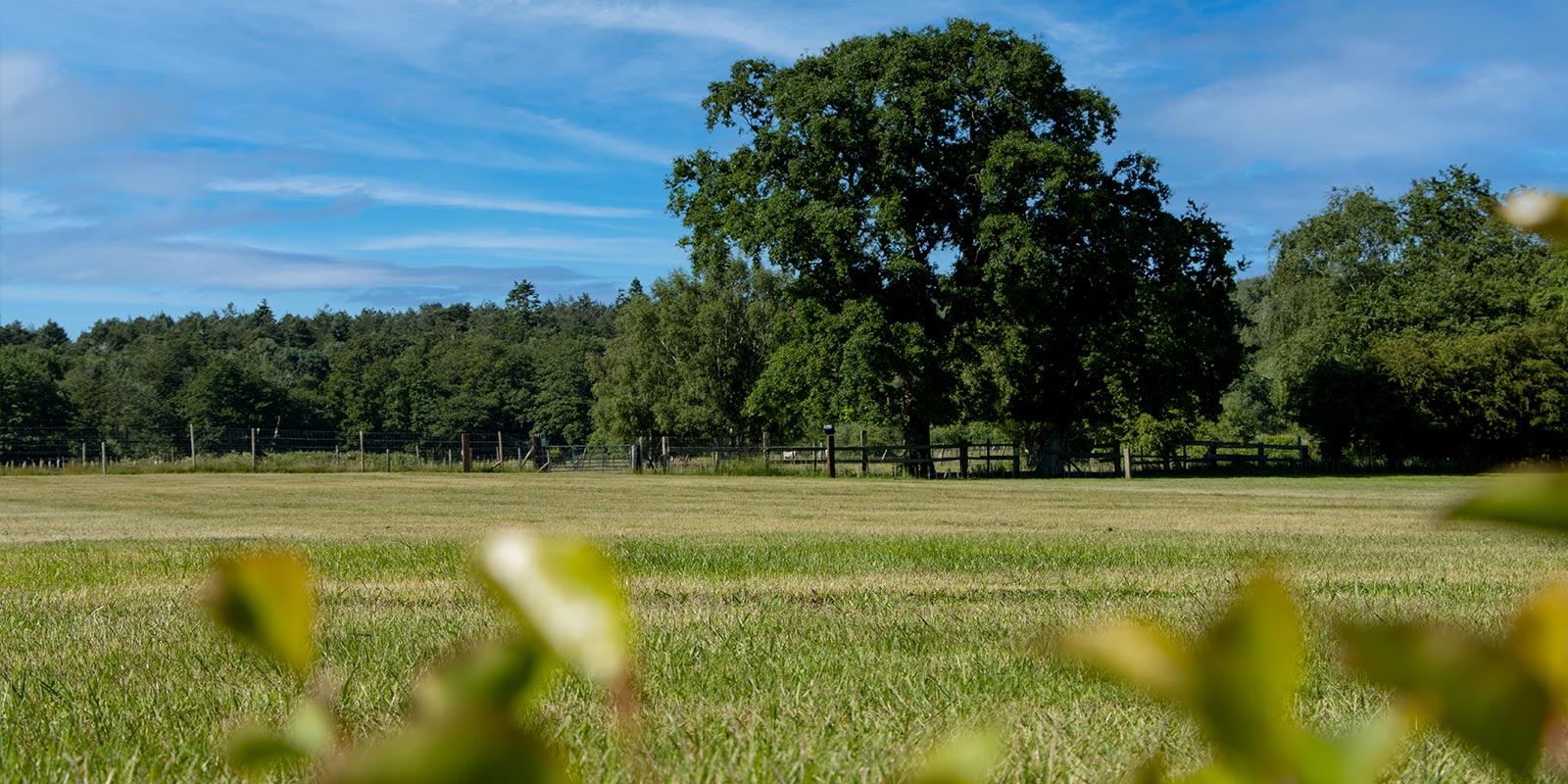

Four marked routes start at the gate here, and a fifth path runs straight past it. From the first week of October they are better than they are in August, for three reasons: the ground is firm, the flies have gone, and you can walk for two hours on the marsh without meeting anybody.
What follows is the five of them in order of length, with what is actually happening out there this month. All four marked routes are circular, all are dog-friendly, and all are free. PDF maps are on each route page, and printed copies are at reception.
One thing about the timings before you set off
The stated durations on the route pages are optimistic. Three miles of marsh path in thirty minutes is a running pace, and nobody walks a flood bank at running pace with a dog and a pair of binoculars. Take the distances as the useful number and allow roughly half an hour per mile, more if you stop to look at things. You will want to stop to look at things.
1. Woodland Wonder Walk, about 1.5 to 2 miles
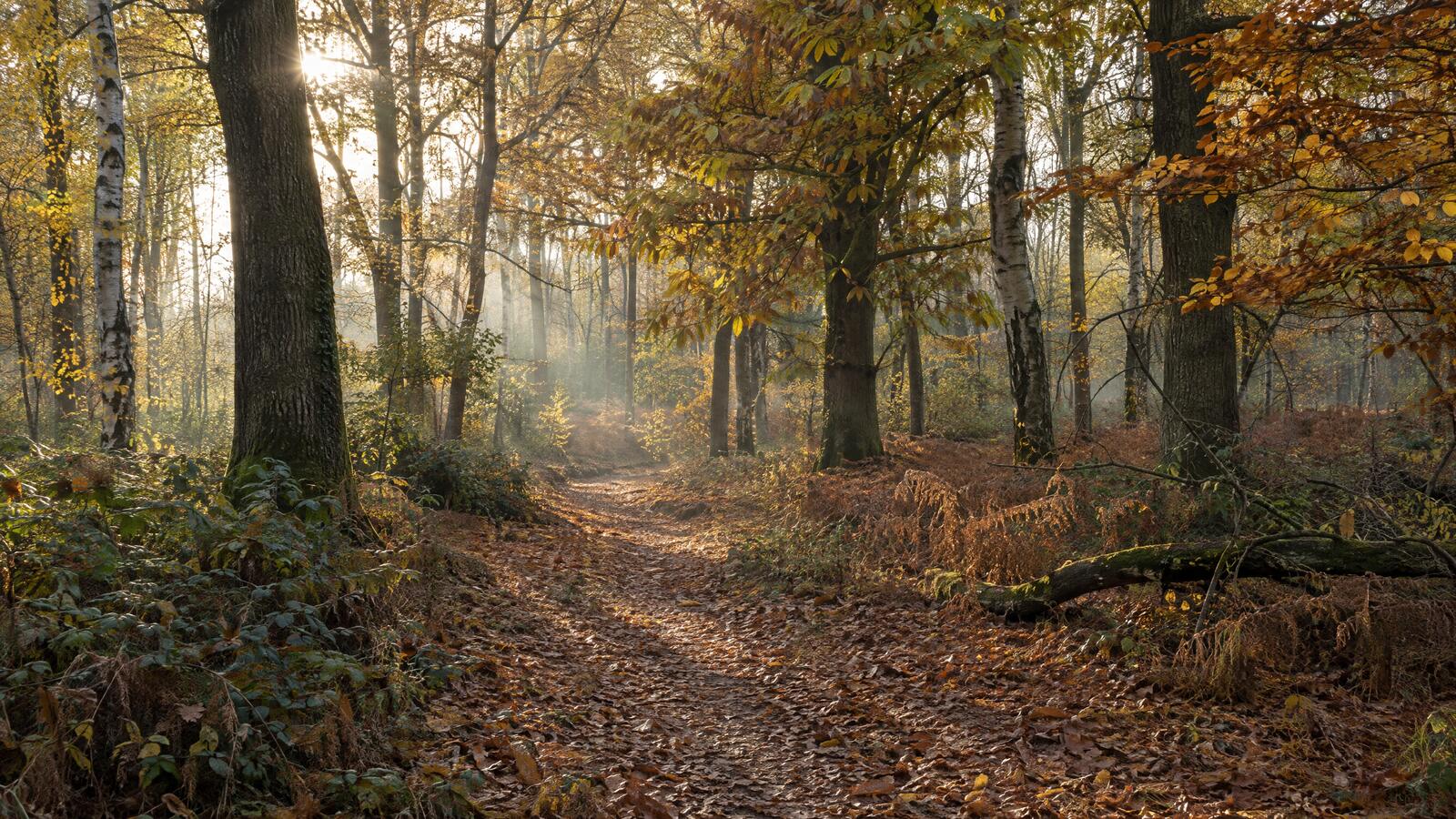
The gentlest of the four and the one to do if you have an hour before dark. A circular trail through mixed woodland: oak, ash, hazel and field maple, with enough shrub layer to hold birds through the winter.
October is when this one earns its place. The canopy turns, the paths go deep in leaves, and because the route is largely enclosed it stays walkable on the days when the wind is coming flat across the marsh and everything else feels exposed. Look for treecreepers working up the older oaks, and fungi on the deadwood after rain.
Dogs can be off lead through the woodland sections.
One honest caveat: if you walk to it from the park rather than driving to the car park, part of the approach is along a main road without a footpath in places. It is short, but it is not a stroll with a dog off the lead.
See the Woodland Wonder Walk route and map
2. One Windmill, One Wood Walk, about 2 to 3 miles
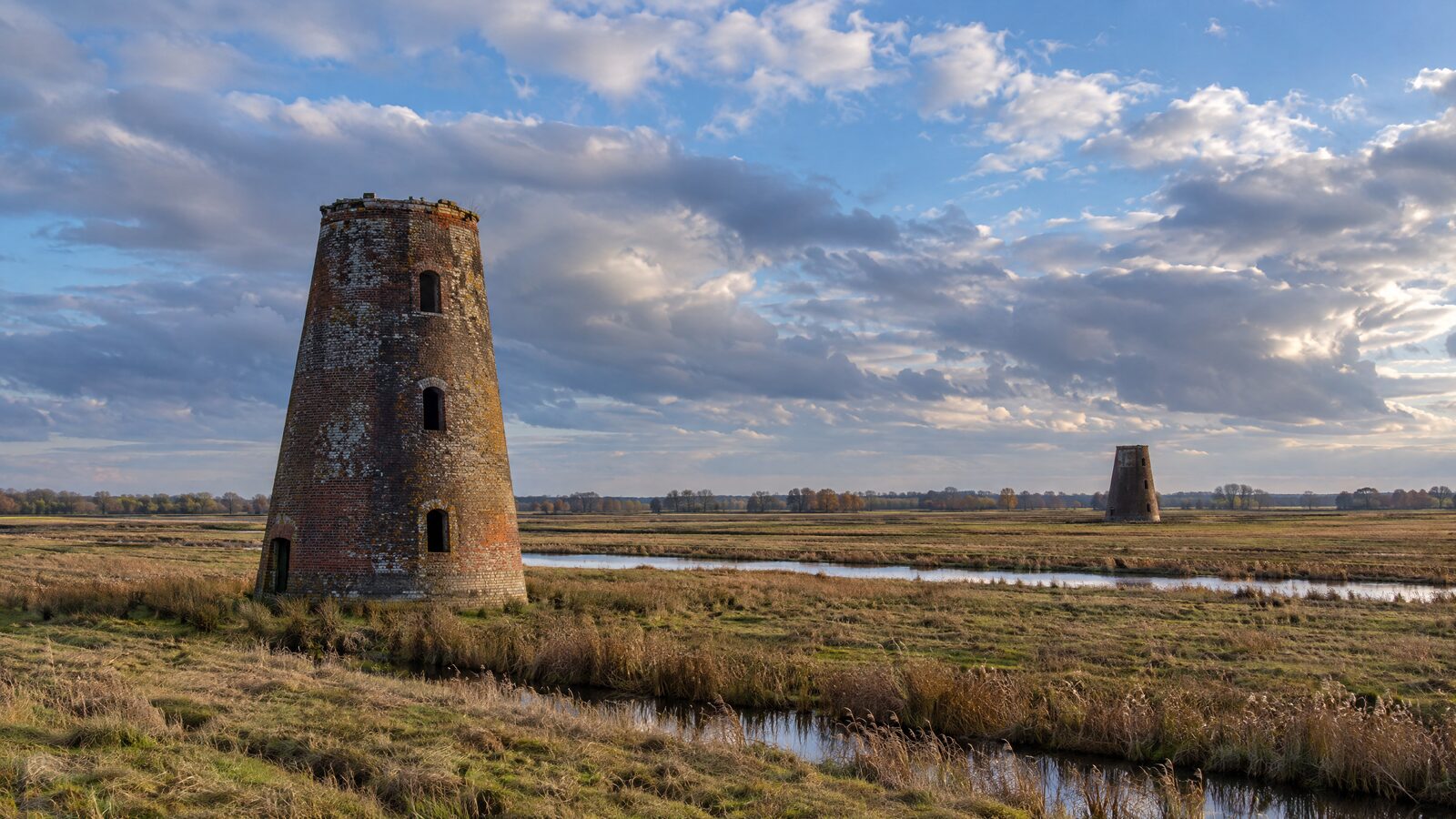
A circular route that takes in one of the brick drainage mills that define the Broads skyline, then loops back through a patch of mixed woodland. Easy underfoot and entirely accessible from the park gate without a car.
The mills on these marshes were built from the 17th century onwards to pump water off the low-lying grazing land into the river channels. Most are preserved rather than working now. You get a close view of the mill structure and then open views across the grazing marshes towards the river.
In the wood, listen for nuthatches and great spotted woodpeckers, both of which are easier to hear in October than in June because there is less competition. On the open section, the light across the marsh in the hour before sunset is the reason photographers come to this part of Norfolk.
See the One Windmill, One Wood Walk route and map
3. Two Windmills Walk, about 3 to 4 miles
The longer variation on the mill route, reaching a pair of drainage mills that sit within sight of each other across open marshland. One is a brick tower mill, the other timber-framed, which is a neat illustration of how Broadland farmers solved the same problem two different ways a century apart. From the higher points on the flood bank you can usually see both at once.
This is the route that most rewards an October walk rather than a July one. The field-edge paths get overgrown through the summer and are considerably easier once the growth has died back. Long trousers and stout boots are still the sensible choice.
Livestock are often on the marsh pastures between June and October, so keep dogs on the lead until you are past them.
See the Two Windmills Walk route and map
4. The Angles Way along the Waveney, as far as you fancy
This one has no map because it does not need one. The Angles Way, the long distance path that follows the Waveney valley, runs directly past the site. Turn left or right out of the gate and keep going.
It is flat, it is grass and flood bank, and it is an out and back rather than a circuit, which means you decide the length. Half an hour out and half an hour back is a perfectly good evening. The river is two minutes from the gate.
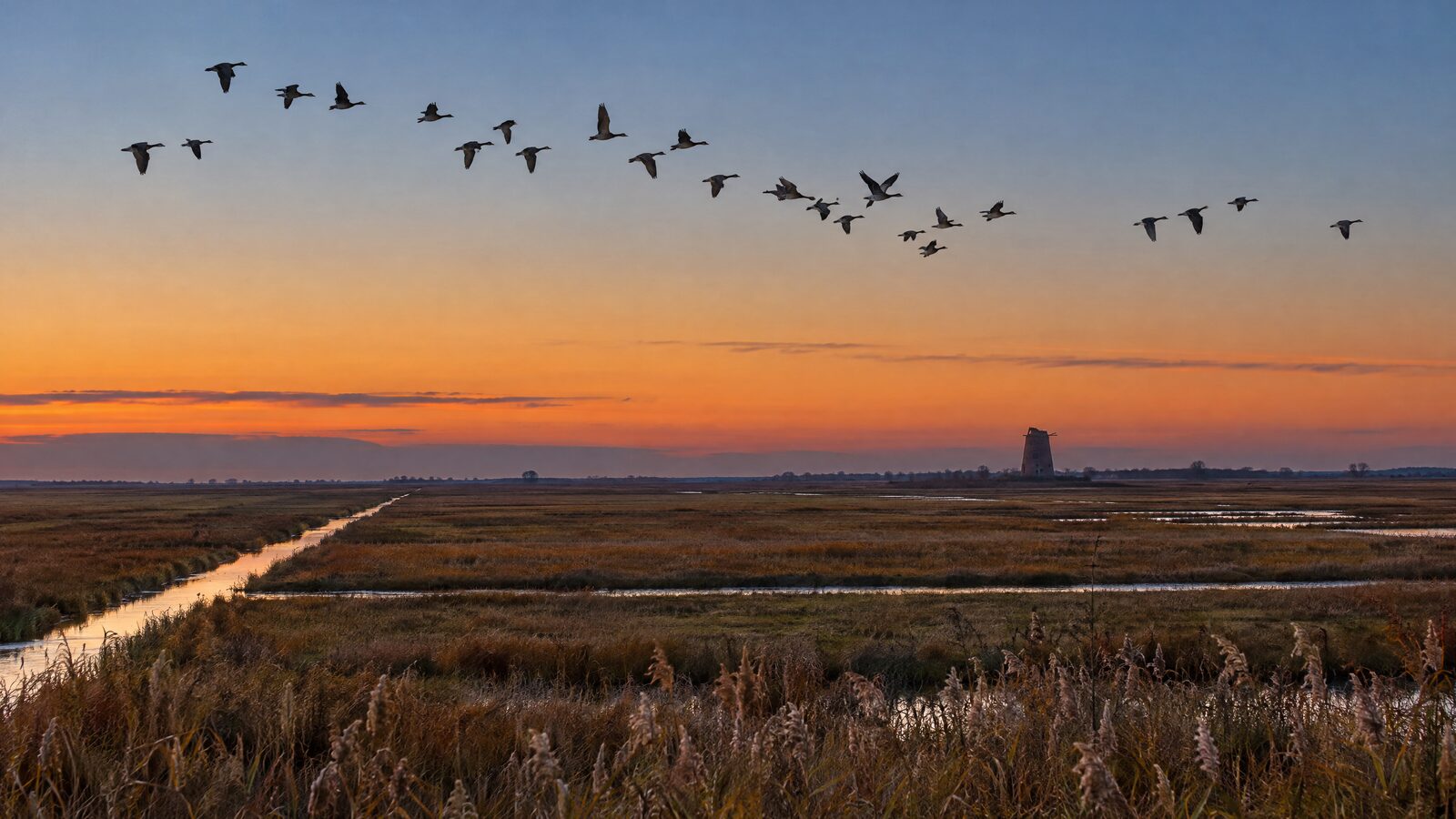
This is the path to be on in the second half of October. Pink-footed geese start arriving on the Broads from late September and keep coming through October, and they come over the marshes in skeins at first light and again at dusk. You hear them a long time before you see them.
Underfoot it stays firm well into the autumn, but it is a flood bank beside a tidal river, so after heavy rain it is muddy in the dips. There is no shelter at all.
5. Haddiscoe Island Walk, about 8 to 10 miles, allow the day
The serious one. A full circular day walk around the grazing marshes of Haddiscoe Island, following the flood banks of the Waveney north before looping the island and returning by quiet lanes and riverside paths.
The island is not really an island. It is reclaimed marshland enclosed between the New Cut, dug in 1833 to link the Waveney and the Yare, and the main river channels. Walking the perimeter gives you the scale of this landscape better than anything else on the list: enormous skies and uninterrupted views across the grazing levels.
In October the summer breeders have largely gone and the winter birds are arriving. Marsh harriers are still quartering the reed, and from late autumn short-eared owls hunt the grass banks at dusk, which is worth timing a walk for. The route passes close to Haddiscoe village and its round-towered Norman church, one of many in Norfolk built from flint because there was no good building stone to be had.
There is no shelter on the flood banks and very little chance of cutting the route short once you are committed. Take food, take water, and take a waterproof whatever the forecast says.
See the Haddiscoe Island Walk route and map
What is actually out there in October
Three things make this month worth planning a week around.
Pink-footed geese arrive from late September and build through October. You will hear them over the marshes at dawn and dusk from any of these routes.
Autumn wader passage is under way on Breydon Water, which is the best estuarine wader site in Norfolk and about ten minutes away by car. It is not a walk from the gate, whatever else you may read, because it sits on the far side of the river from here. Drive round and watch it from the ramparts of Burgh Castle Roman fort, which is free and open all year.
Grey seal pupping starts at Horsey and Winterton from the end of October and runs into January. Volunteer wardens rope off viewing areas so you can watch the colony without disturbing it. It is a drive rather than a walk, and it is worth it.
Practical notes, mostly about dogs
- Up to two dogs per pitch, at no extra charge, and there is a dog wash bay by the shower block. The marsh is wet for most of the year and the bay earns its keep
- Livestock are on the grazing marshes into October. Leads on until you are past them
- The riverside and field-edge paths are the ones that go muddy first. The woodland route is the fallback on a bad day
- PDF maps for all four marked routes are on the route pages, and printed copies are at reception
Walking from the pitch rather than the car park
The point of all of the above is that you can do it in slippers and a coat before breakfast, because the paths start where you are parked.
Priory Farm is an adults-only touring park at St Olaves, 18 and over, inside the Broads National Park boundary and two minutes from the River Waveney. Hardstanding pitches are 8 metres by 10 metres with a 10A electric hookup, from £24 a night in low season. One night is fine, there is no booking fee, and cancellation is free up to 28 days before arrival.
The Bell Inn is across the road and gives our guests 10% off, which is the correct way to finish a walk in October.
If you would rather leave the van here through the winter and walk these routes whenever you feel like it, a winter seasonal pitch runs October to February from £1,050 including year-round storage, with electricity metered separately.